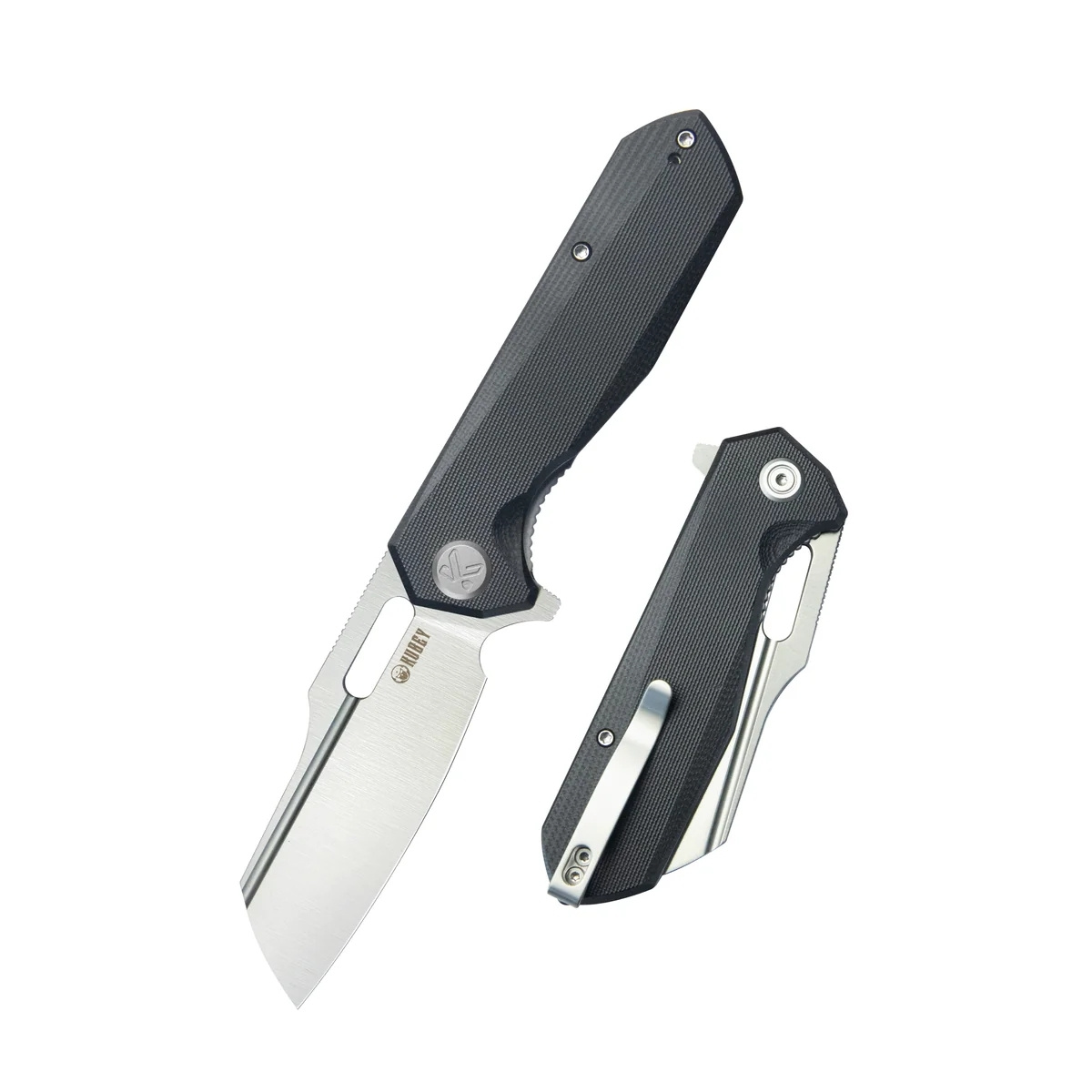
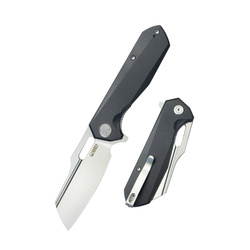
Kubey Atlas Knife Black G10, Satin 14C28N by Jelly Jerry (KU328D)

- Atlas Black G10, Satin, a strong, compact EDC folder at a great price. Blade sheepsfoot made of Sandvik 14C28N stainless steel, ergonomic G10 composite handle. Safety is provided by a liner lock. An excellent tool!
 63,71 €
Kubey Atlas Black G10 Folding Knife, Satin 14C28N by Jelly Jerry (KU328D)
The Kubey Atlas KU328D is an EDC folding knife designed by Jelly Jerry, featuring a Sandvik 14C28N blade paired with a black G10 handle. The design features a Liner Lock, ceramic ball bearings, and two manual opening methods—a flipper and a blade hole.
The 84.00 mm blade features a Sheepsfoot profile, a flat grind, and a satin finish. It opens manually using the flipper or the hole in the blade, and once fully extended, the blade is secured by the Liner Lock.
Sandvik 14C28N and Vacuum-Cryogenic Heat Treatment
The blade is made of Sandvik 14C28N steel, hardened to 60–62 HRC. Vacuum hardening combined with cryogenic treatment was used, which helps achieve high hardness, wear resistance, and stable steel properties during regular use.
Sheepsfoot, flat grind, and Satin
The Sheepsfoot profile ensures well-controlled blade geometry and performs well in precision tasks. The flat grind supports efficient cutting, while the satin finish gives the blade a subdued, classic look.
Black G10, Liner Lock, and Ceramic Bearings
The handle is made of black G10. The design is complemented by gray stainless steel spacer rings and sandblasted steel hardware, which harmonizes well with the satin-finished blade.
Ceramic ball bearings ensure smooth blade operation, while the Liner Lock stabilizes the blade when fully open. The steel clip can be mounted on the right or left side in a tip-up configuration.
Key Features at a Glance
- Sandvik 14C28N — steel with a hardness of 60–62 HRC.
- Vacuum-cryogenic treatment — promotes high hardness, wear resistance, and stability of the steel.
- Sheepsfoot — a functional blade profile offering good control.
- Flat grind — versatile cutting geometry.
- Satin — satin finish on the blade.
- Black G10 — black handle.
- Liner Lock — classic blade lock.
- Ceramic ball bearings — smooth operation of the mechanism.
- Flipper and Thumb Hole — two ways to open the knife manually.
- Steel spacer sleeves — open-frame handle design.
Technical data
| Product Number | KU328D |
| Product Name | Kubey Atlas Black G10, Satin 14C28N by Jelly Jerry |
| Overall Length | 198.00 mm / 7.80" |
| Blade Length | 84.00 mm / 3.31“ |
| Blade Thickness | 3.10 mm / 0.12” |
| Handle Length | 114.00 mm / 4.49“ |
| Handle Thickness | 13.00 mm / 0.51” |
| Weight | 111.00 g / 3.92 oz |
| Blade Material | Sandvik 14C28N |
| Blade Hardness (HRC) | 60–62 HRC |
| Blade Grind | Flat |
| Blade Finish | Satin |
| Handle material | G10 |
| Handle finish color | Black |
| Backspacer material | Stainless Steel (spacer sleeves) |
| Backspacer color | Gray |
| Clip | Right/Left, Tip-Up |
| Clip material | Stainless Steel |
| Pivot Axle | Caged Ceramic Ball Bearing |
| Lock | Liner Lock |
| Opening Mechanism | Manual, Flipper / Thumb Hole |
| Additional Accessories | None |
| Designer | Jelly Jerry |
| Brand | Kubey |
| Manufacturer | Kubey Knife |
| Country of Origin | P.R.C. |
Frequently Asked Questions
How do I care for Sandvik 14C28N steel?
It’s a good idea to clean the blade regularly and dry it thoroughly. 14C28N combines corrosion resistance with ease of sharpening, making it ideal for everyday use.
How do you sharpen the Kubey Atlas?
14C28N steel responds well to ceramic stones, water stones, and guided sharpening systems. It’s important to maintain a consistent angle and regularly refresh the cutting edge.
What sharpening angle should be used for the Kubey Atlas?
The recommended sharpening angle range is 15°–20°. This allows you to adjust the edge geometry to your preferred balance between cutting aggressiveness and blade durability.
How does the Liner Lock work?
The Liner Lock uses a spring-loaded liner component that, when the knife is opened, slides behind the blade and stabilizes the blade in the open position.
How do you maintain ceramic ball bearings?
It’s a good idea to regularly clean the area around the pivot of dust and fine debris. If necessary, you can use a small amount of a cleaner designed for knife mechanisms.
Prepared by: Specialists at Sharg® company – Your expert in EDC and cutting tools
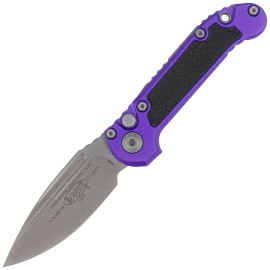
Microtech LUDT Gen III S/E Automatic Knife Purple Aluminum, Apocalyptic M390MK by Tony Marfione (1135-10APPU)