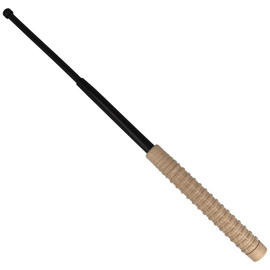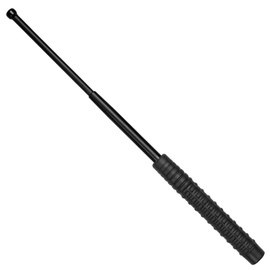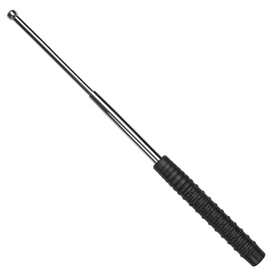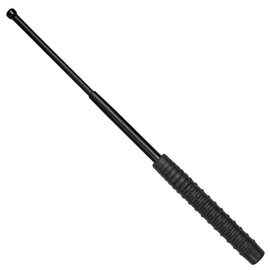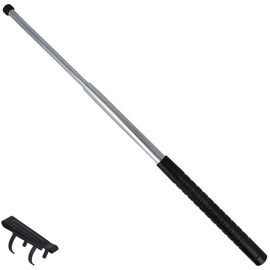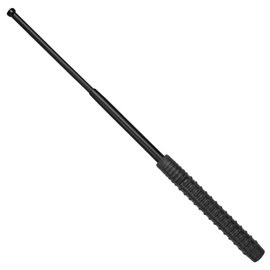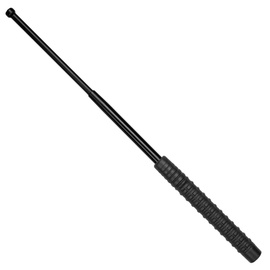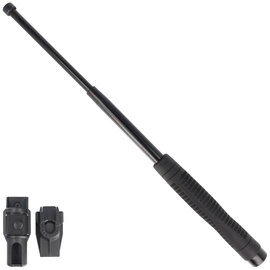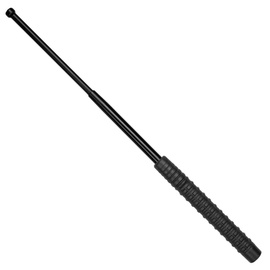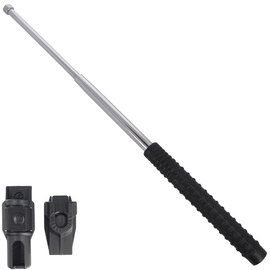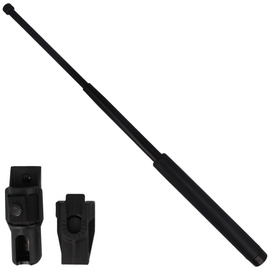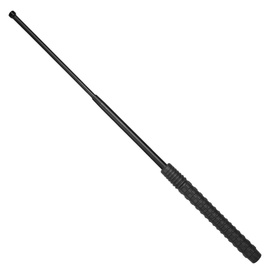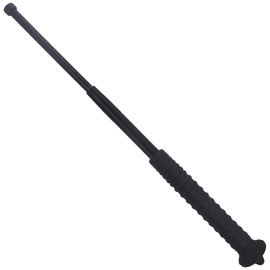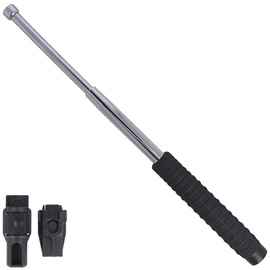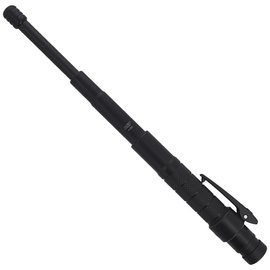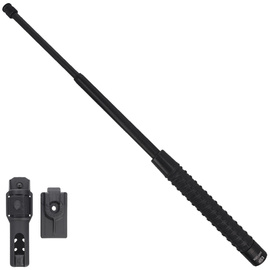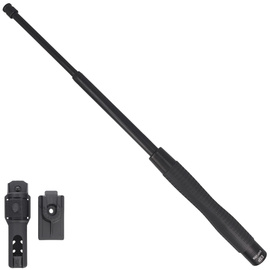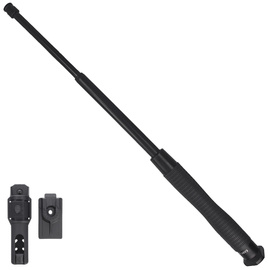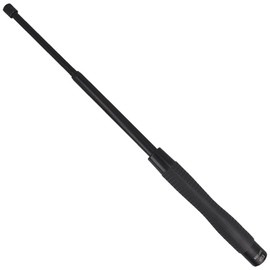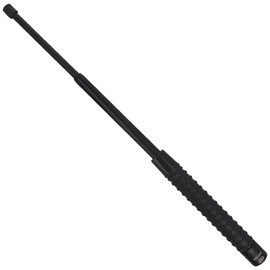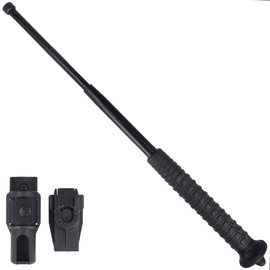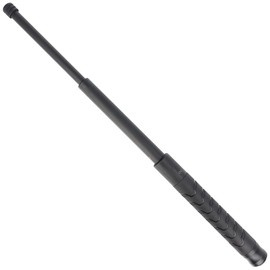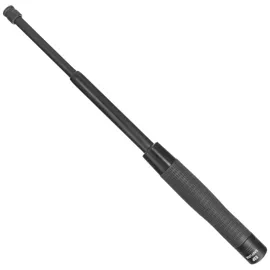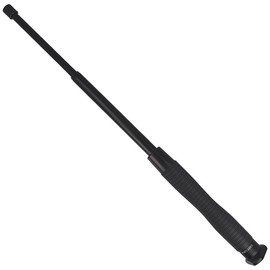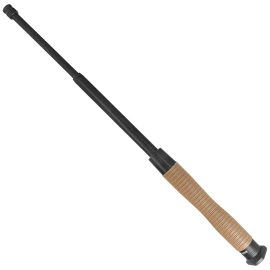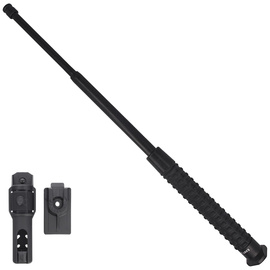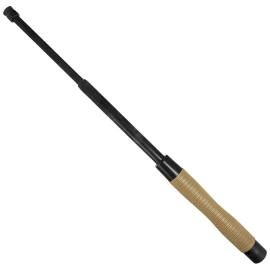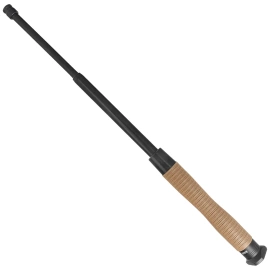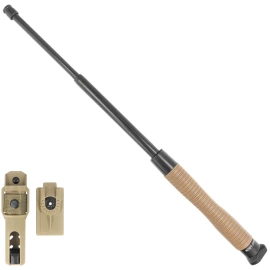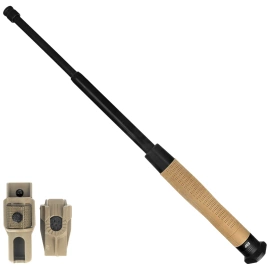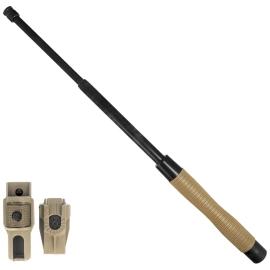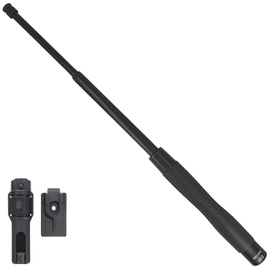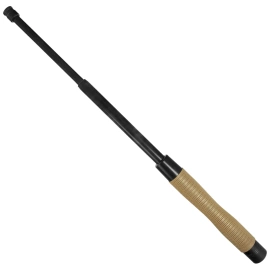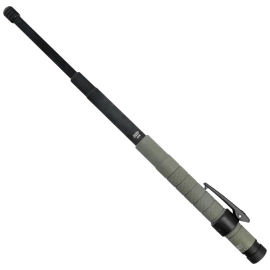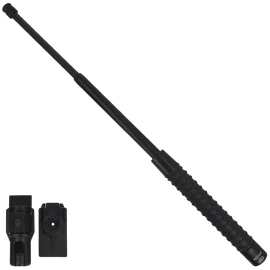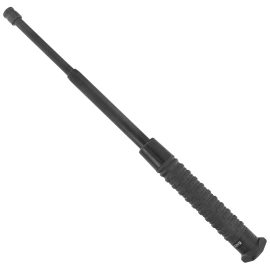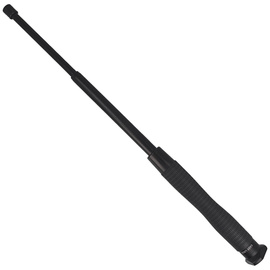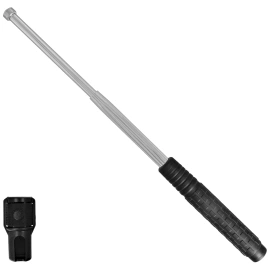
Telescopic Baton Mechanisms: What the Lock Really Does
Many telescopic batons look similar: handle, extendable segments, tip. The biggest real-world difference lies inside: the segment locking mechanism after extension and how that lock is released when collapsing.
This guide organises the most common solutions from ASP, ESP, and Bonowi so you can recognise them from product descriptions — and marketing names (Lock/Loc, Button-Unlock, CamLock, DiscLoc) stop sounding like random words.
- Friction lock (Friction Lock / Friction Loc / Frictionlock, sometimes called impact-close): collapsed by pressing the tip against a hard surface.
- Mechanical lock (push-button / button-close): collapsed by pressing a button and sliding the segments in.
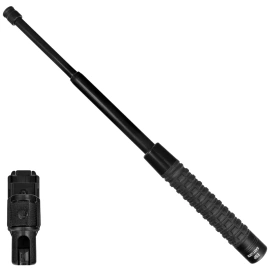
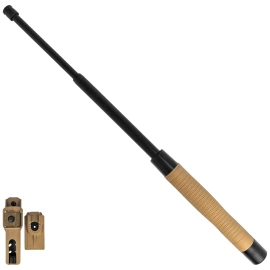
- Examples: ESP Easy Lock (Button-Unlock), Bonowi CamLock (SmartLock), ASP DiscLoc (Talon).
Three Concepts Worth Separating
To read descriptions without confusion, separate these three things that stores often mix together.
- Locking mechanism: what holds the segments extended.
Most common are friction locks (based on traction) and mechanical locks (based on internal components). - Release method: how you collapse the baton.
Usually pressing the tip against a hard surface (friction) or pressing a button and sliding segments in (mechanical). - Deployment method: how you open it.
May be a full swing in open space or controlled hand extension if the design allows.
This simple concept map is the key: the word “button” usually describes the release method, not always the lock type itself. That’s why two brands can use similar words but offer different designs.
Two Common Families of Solutions
In practice most market names boil down to two families:
- Friction locks (Friction Lock / Friction Loc / Frictionlock, sometimes impact-close): segments wedge via friction; collapse usually requires pressing the tip against a solid, hard surface.
- Mechanical locks (push-button / button-close): segments held by internal mechanism; collapse by releasing the lock with a button and sliding segments in — no need to “close against the ground.”
Within the same family there can be construction and quality differences, but the most important for the buyer is one thing: do you need a hard surface to collapse it, or is a button and controlled hand movement enough?
Quick Recognition Test from Product Description
- If description mentions pressing the tip against a hard surface or “closing by impact,” it’s usually a friction lock.
- If it mentions pressing a button at the handle end and sliding segments in, it’s a mechanical lock.
- Terms like Button-Unlock, Easy Lock, push-button closing almost always mean mechanical lock.
- CamLock or SmartLock with emphasis on quiet/smooth operation usually points to Bonowi family.
- DiscLoc (or variants) plus Button Release or Cap Release usually refers to ASP Talon family.
How to Close a Telescopic Baton: Friction vs Button
The most common practical difference: friction-lock batons release traction by pressing the tip against a hard surface; button-lock batons collapse by pressing a button and sliding segments in.
- Friction (Friction Lock / Loc / Frictionlock): press tip against hard surface → slide segments in.
- Button (push-button / Button-Unlock / CamLock / DiscLoc): press button or cap → slide segments in, no ground contact needed.
Friction Lock, Friction Loc, Frictionlock: Friction (Traction) Lock
The most widespread mechanism in telescopic batons. Names vary by brand and market, but the principle is the same: segments lock via friction.
How Friction Lock Works
After extension, segments “seat” tightly at contact points. Friction increases with pressure and fit, so firm deployment gives secure lock. The same trait can make collapse require deliberate release of traction.
How to Collapse a Friction-Lock Baton
Collapse by overcoming friction so segments can slide in. Descriptions usually mention pressing the tip against a stable, hard surface. In practice, repeatability and solid support matter — the mechanism can “bite” harder after energetic opening.
Pros and Limitations in Daily Use
- Advantages: simple construction, wide availability, easy to understand, common in popular product lines.
- Limitations: collapse usually requires hard surface and proper technique; performance can depend on conditions (dirt, moisture, wear).
How to Recognise Friction Lock in Descriptions
- Names: Friction Lock, Friction Loc, or Frictionlock.
- Collapse described as pressing tip against hard surface.
- No mention of button release and sliding segments after pressing.
How ASP, ESP, and Bonowi Usually Name It
- ASP: often Friction Loc in trade.
- ESP: more often Friction Lock.
- Bonowi: frequently combined Frictionlock, especially in EKA lines.
Mechanical Locks: Common Idea, Different Executions
Mechanical locks share one thing: segments held by internal mechanism; collapse by releasing the lock with a button and sliding segments in. Differences appear in construction details and how manufacturers address smoothness, noise, and ergonomics.
Descriptions of mechanical models often note they are not intended for the ground-impact collapse typical of friction locks. In practice, follow the description for the specific series and treat “button collapse” as the main identifier of this family.
ESP Easy Lock: Button-Unlock (Mechanical Lock)
Beside friction models, ESP offers mechanical ones described as Easy Lock. In manufacturer and retailer descriptions, the term Button-Unlock often appears, clearly communicating the collapse method.
What It Changes in Practice
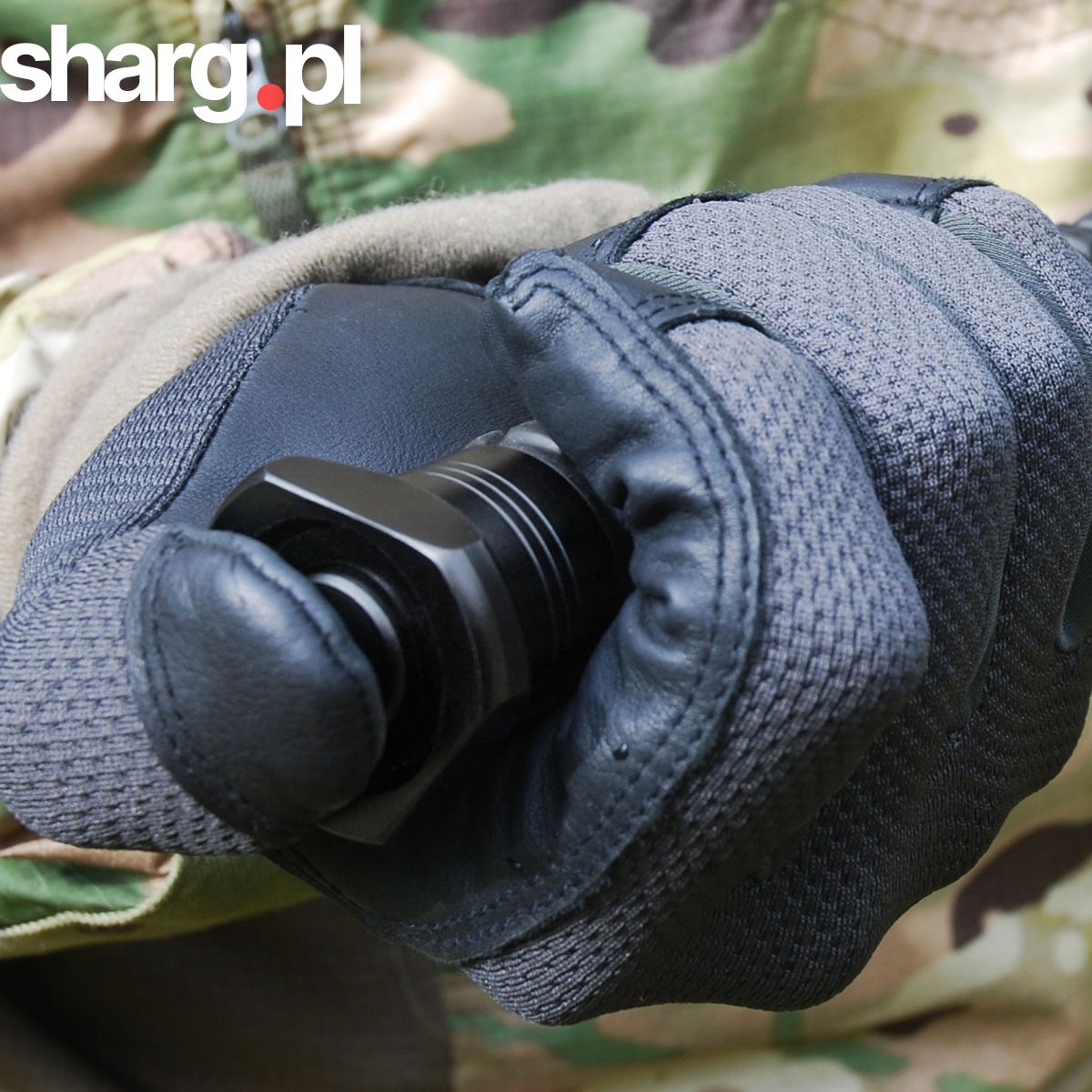
The biggest user difference is simple: instead of finding a hard surface to release traction, you press a button at the handle end and slide the segments in.
How to Recognise Easy Lock in Product Description
- Names: Easy Lock or Button-Unlock.
- Collapse described as mechanical: press button and slide segments in.
- Opening may mention more controlled segment extension when space is limited.
Bonowi CamLock: SmartLock (Mechanical Lock with Emphasis on Smooth Operation)
Bonowi is associated with the EKA line and CamLock system. In trade, SmartLock often appears as a parallel name for the same family. Descriptions frequently highlight smooth segment movement and reduced metallic noise.
How It Feels in Use
Segments held by internal mechanism; collapse after releasing button at handle end and sliding segments in. Classic button-lock trait — no ground contact needed.
What “Smooth Operation” Really Means
“Quiet operation” usually means reduced rattling and loose sounds during movement, plus more controlled guidance. Descriptions often mention smoothness, noise reduction, and more stable segment behaviour.
How to Recognise CamLock or SmartLock in Description
- Names: CamLock, Camlock, or SmartLock.
- Collapse described as button-based: release and slide segments in.
- Description frequently emphasises smoothness, quietness, or reduced “rattling.”
ASP DiscLoc: Talon Family and Button Release or Cap Release
In the ASP world, the Talon line is often associated with DiscLoc (sometimes Disc Loc or Disc-Loc). This is a mechanical approach to segment locking, different from classic friction.
What DiscLoc Means in Description
It signals that locking relies on internal components; collapse by releasing mechanism and sliding segments in. Most important for buyers: collapse behaviour differs from friction solutions.
Button Release and Cap Release: What’s the Difference
In this family’s descriptions you may see two release methods:
- Button Release: pressing a distinct button at the end.
- Cap Release: pressing the entire end cap, which acts as the button.
Treat these as ergonomic variants within the same mechanical family.
How to Recognise DiscLoc in Product Description
- DiscLoc or variant appears.
- Button Release or Cap Release mentioned.
- Collapse described as releasing mechanism and sliding segments in — no hard-surface press needed.
LeverLoc: Short Historical Note to Avoid Name Confusion
In older ASP descriptions you may see LeverLoc. Remember only this: it’s associated with a mechanical locking approach different from classic friction. If you encounter it, rely on the model’s instructions and description — release method may differ from newer families.
Name Map: What’s a Family and What’s Just a Spelling Variant
Manufacturers and retailers often use inconsistent spelling, leading to confusion. Most cases boil down to this:
- Lock and Loc: usually just spelling convention, not different function.
- Friction Lock, Friction Loc, Frictionlock: most often the same friction-lock family, differently named.
- Easy Lock and Button-Unlock: shorthand for ESP’s mechanical button-release family.
- CamLock and SmartLock: parallel names for Bonowi’s button-based system, often highlighting smooth/quiet operation.
- DiscLoc plus Button Release or Cap Release: most often signals ASP’s mechanical Talon family.
When in doubt, return to one question: does collapse require pressing the tip against a hard surface, or is a button and sliding segments enough? That’s the most reliable filter.
How to Choose a Mechanism Without Getting Lost in Technical Jargon
There’s no single “best” mechanism for everyone. The biggest differences appear in daily handling and collapse predictability. Always read the exact description before purchase.
If Simplicity Matters
Friction Lock is structurally simple and extremely common. Good choice if you accept collapse by pressing against a hard surface and want a classic, widely available solution.
If You Want to Collapse Without Searching for a Hard Surface
Choose mechanical lock: ESP Easy Lock, Bonowi CamLock, or ASP DiscLoc/Talon family. Recognise them in descriptions by button release and sliding segments in — no ground contact needed.
If Smoothness and Low Noise Are Important
Descriptions that emphasise smooth operation often highlight mechanical solutions with reduced rattling and controlled segment guidance. Look for explicit mentions of quietness, smoothness, and stable segment behaviour.
If Organising Store Listings
The safest classification is by collapse method. This criterion lets you assign a product to the correct family even when sellers use inconsistent Lock/Loc spellings or mix marketing names.
Practical and Legal Note
Before buying or possessing a telescopic baton, check local laws and regulations for storage, carry, and transport. This guide is informational and organises mechanism naming.
FAQ
Here are the questions that most often come up when choosing and comparing mechanisms in ASP, ESP, and Bonowi telescopic batons. Answers focus on how the lock works, how to recognise it from descriptions, and how to maintain it for reliable operation.
Names and Recognition
The most reliable clue is the word Friction in the name or collapse description. If it mentions pressing the tip against a hard surface or “closing by impact,” it’s usually friction. If it mentions pressing a button at the handle end and sliding segments in, it’s mechanical.
Most often just spelling convention or part of a trade name. Instead of focusing on the ending, check the collapse description: hard-surface press (friction) or button and slide segments in (mechanical).
In practice, yes — the same friction-lock family, just named differently due to market, language, or producer/store preference.
It signals a mechanical lock where collapse is by pressing a button at the handle end and sliding segments in. Key practical difference: no traction release against a surface like friction locks.
Typical trade confusion: one name often tied to manufacturer communication, the other to retailer/store descriptions. For buyers, the important thing is that it’s a mechanical button-collapse family, frequently described as smooth and quiet.
DiscLoc is a recognisable term for ASP’s mechanical family associated with the Talon line. It tells you locking isn’t purely friction-based; collapse is by releasing the mechanism and sliding segments in.
Usually two ergonomic variants within the same mechanical family. Difference is in release feel: one has a distinct button, the other presses the entire end cap that acts as the button.
Most often descriptive language, not one specific standard. All indicate collapse by releasing a button and sliding segments in — without pressing the tip against a hard surface.
Practical Issues
Friction locks rely on traction and tight fit. Energetic deployment can seat segments harder, increasing friction. This gives secure lock but may make release more difficult.
Most often: angled press (not axial), too soft/unstable surface, dirt on segment joints, or very tight friction after dynamic opening.
Common mistake. Angled press can worsen jamming. Safest to keep the baton axial and perform release motion straight, without twisting segments.
Not always. In friction locks it’s often jammed traction or dirt. If it happens repeatedly, treat as a signal to clean segments and check for burrs, dents, or deformation at joints.
No. Mechanical button locks are designed for button release and hand-sliding segments in. Attempting ground-impact closure can permanently damage the baton or at best degrade mechanism performance and accelerate wear.
Most common causes: incomplete button press, segments out of alignment, dirt at joints, or increased resistance in guidance. Practice controlled axial collapse and ensure continuous button pressure while sliding.
Signal that segments didn’t fully seat. In friction locks it may mean insufficient traction; in mechanical — lock didn’t engage properly. Good reminder to verify secure lock after deployment.
Opening and Maintenance
Depends on design and series. Mechanical models more often mention controlled hand extension when space is limited, but it’s not universal. If description emphasises “controlled opening,” it’s usually a notable feature of that family.
Most often: dirt, sand particles, moisture, and lack of regular joint cleaning. In button locks, debris around locking elements also matters — cleanliness directly affects collapse smoothness.
Safest rule: follow the manufacturer’s recommendation for the specific series. Excess lubricant in friction locks can alter traction (the key to the lock); in mechanical locks it may help short-term but mask underlying dirt issues. If the maker specifies maintenance, treat it as routine care, not emergency repair.
Popular reflex, but not a universal fix. In friction locks it can change traction (critical to function); in mechanical it may help temporarily but mask dirt problems. Best to start with cleaning, then see if the maker allows a specific lubricant.
Smoothness and Sound
Usually reduced metallic clatter and rattling during movement, plus more controlled segment guidance. Sometimes from added damping elements at joints, sometimes better segment leading. For buyers, it’s a real criterion if quiet/smooth operation matters.
Usually a combination of manufacturing tolerances, segment guidance, damping elements, and joint design. Descriptions of smooth-operation models often mention reduced noise and stable segment behaviour.
Other Practical Questions
Quickly clean segment joints and wipe surfaces before debris works into contact points. If resistance persists after cleaning, don’t force it — check for burrs, dents, or deformation on segment edges.
No. Friction is simple and extremely common but usually needs a hard surface for collapse. Mechanical offers more predictable button collapse but requires more attention to cleanliness and segment smoothness. “Better” is the one that fits your handling style and expectations.
From pure handling perspective, mechanical button locks are usually more predictable because they don’t rely on variable traction. If repeatability is priority, look for clear descriptions of button release and sliding segments in.
Most often friction lock. Its advantage is simple operating principle. Downside is ground-dependent collapse and greater sensitivity to conditions (dirt, moisture, opening force).
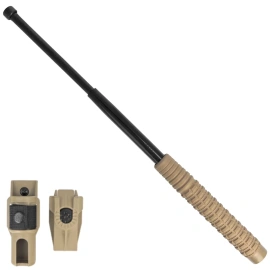
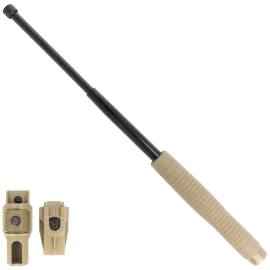
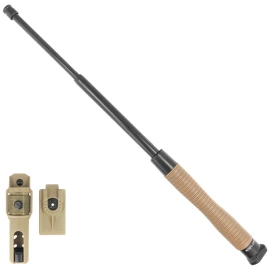
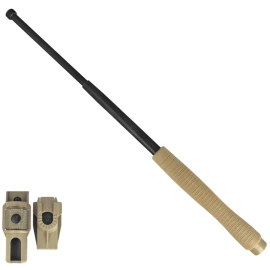
It can — manufacturers often use different handle diameters, end caps, and construction details across series. Safest to match accessories to the specific family and manufacturer description for the model, not just length.
If you want to quickly browse products from this family, check the filtered selection: telescopic batons with friction lock.
In Poland, the legality of a telescopic baton depends primarily on its construction. The Firearms and Ammunition Act defines certain batons as white weapons, including those with a heavy/hard tip or inserts of such material, and those made of heavy/hard material imitating a baseball bat.
Therefore, the safest way is to buy telescopic batons from Sharg.pl. The batons in our offer do not require a permit in Poland and come with a large selection of dedicated holsters and belt mounts and accessories. If in doubt about a specific model, rely on legal texts and product specs, not just the common term “telescopic baton.”
- Mass events: prohibition on bringing or possessing weapons or other dangerous objects at mass events.
- Assemblies: persons possessing weapons or other dangerous materials or tools may not participate in assemblies.
- Public place and “circumstances”: Petty Offences Code provides liability for possessing in public a “knife, machete, or other similarly dangerous object” when circumstances indicate intent to commit a crime (possible forfeiture).
Transport and travel: In Poland the key is construction classification (whether the model falls under the white-weapon definition in the Act); abroad — especially in the EU — rules vary widely (from legal possession to carry restrictions to outright bans). When transporting a baton, know the destination country’s laws and transit countries.
Legal basis (statute texts):
Note: this is general information, not legal advice. If in doubt about a specific model (especially tip and possible inserts), rely on construction description and current wording of the law.